
How Come Homes and Buildings Stopped Being Built with Awnings
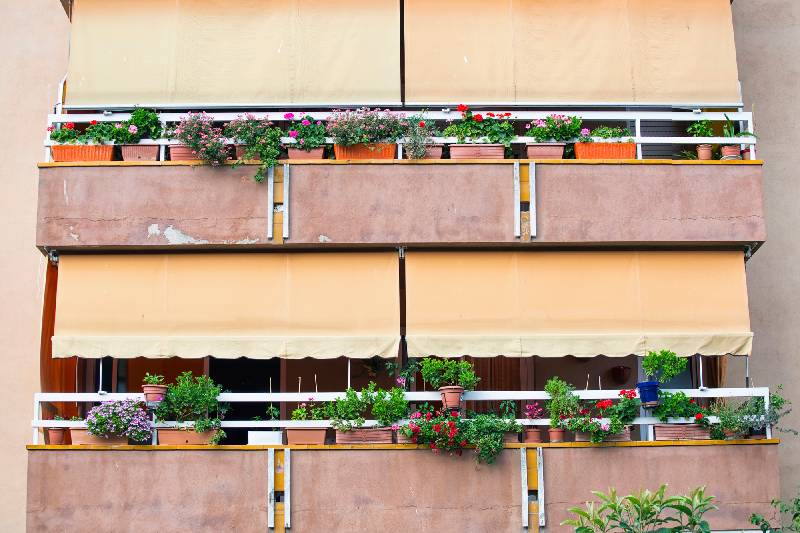
Take a stroll through the historic districts of Phoenix or the older neighborhoods of Tucson, and you’ll notice a distinct architectural feature that seems to have vanished from modern subdivisions: the permanent window awning. In the early 20th century, awnings in Phoenix weren’t just decorative accents; they were essential survival tools.
At Phoenix Tent and Awning Company, we often get asked why this practical feature disappeared from standard construction blueprints. If they worked so well for our grandparents, why did modern builders move away from them?
The answer is a mix of technological shifts, changing aesthetic trends, and the economics of the construction industry. To understand where we are going, we have to look at why we stopped.
The Pre-A/C Era: Architecture as Insulation
Before the 1950s, staying cool in the desert was a matter of clever engineering. Builders utilized high ceilings, sleeping porches, thick adobe walls, and most importantly strategic shading.
Back then, awnings in Mesa and surrounding areas were the primary defense against the “greenhouse effect.” By stopping the sun’s rays before they even touched the glass of a window, an awning could reduce heat gain by up to 77%. Without them, a home in the middle of a July afternoon would be virtually uninhabitable.
1. The Arrival of “The Great Equalizer”: Air Conditioning
The single biggest reason for the decline of built-in awnings was the commercialization of residential air conditioning. As HVAC systems became standard in the post-WWII housing boom, builders began to view “passive cooling” (like awnings and natural ventilation) as obsolete.
Architects shifted their focus. Instead of designing a house to work with the environment, they designed houses that could be kept comfortable through sheer mechanical force. This led to the rise of the “ranch style” and eventually the modern stucco-and-tile homes we see today. If you could just turn a dial to make it 70 degrees, why bother with the maintenance and cost of installing awnings in Scottsdale?
2. The Shift Toward Minimalist Aesthetics
Architecture, like fashion, moves in cycles. In the mid-to-late 20th century, the “International Style” and “Modernism” took hold. These styles emphasized clean lines, flat surfaces, and a lack of “clutter” on the exterior of a building.
Awnings especially the traditional striped canvas variety were suddenly seen as “fussy” or “old-fashioned.” Developers in the growing suburbs wanted a uniform, streamlined look. This trend persisted for decades, leading to the “beige box” era of the 90s and 2000s, where any exterior projection was seen as a disruption of the home’s silhouette.
3. Construction Economics and “Value Engineering”
For a large-scale developer building hundreds of homes in a new community, every dollar counts. When calculating the cost per square foot, exterior shading is often the first thing to be “value-engineered” out of the budget.
Standardizing windows without the need for specialized mounting hardware for awnings in Tempe or awnings in Peoria saved developers thousands of dollars across a project. They passed the cooling “cost” onto the homeowner in the form of higher monthly electric bills, while keeping the initial purchase price of the home lower.
The Hidden Cost of Modern “Awnings-Free” Buildings
While the removal of awnings made homes cheaper to build and gave them a “modern” look, it created a massive energy problem. We are now seeing the consequences:
- Sky-high Utility Bills: Relying 100% on A/C to fight radiant heat gain is incredibly expensive.
- HVAC Wear and Tear: When a home lacks shade, the A/C unit has to run twice as hard to keep up with the sun hitting the glass.
- Faded Interiors: Without awnings in Glendale, UV rays stream into windows, bleaching hardwood floors, expensive rugs, and furniture.
The Great Return: Why Awnings are Making a Comeback
The good news is that we are currently experiencing a renaissance in exterior shading. Homeowners are realizing that mechanical cooling isn’t the only answer and it’s certainly not the most sustainable one.
At Phoenix Tent and Awning Company, we’ve seen a surge in interest for several reasons:
Smart Technology and New Materials
Modern awnings are a far cry from the heavy, rot-prone canvases of 1920. Today’s high-tech fabrics are fade-resistant, mold-resistant, and come in thousands of colors. Retractable technology allows homeowners to have shade when they need it and a “clean” look when they don’t. You can even get motorized systems that automatically deploy when sensors detect high heat.
Curb Appeal and Personalization
As people move away from the “cookie-cutter” look of modern subdivisions, adding custom awnings in Arizona has become a popular way to add architectural character. It’s an easy way to make a home stand out while simultaneously adding value.
Environmental Consciousness
With a growing focus on “Green Building,” architects are returning to the wisdom of the past. By installing window shading, homeowners can significantly reduce their carbon footprint by lowering their energy consumption.
Conclusion: Bringing the Shade Back to the Valley
The disappearance of awnings from modern construction wasn’t because they stopped working—it was because we briefly forgot how much we needed them. As we face hotter summers and rising energy costs, the “old-fashioned” awning is looking more like a futuristic solution every day.
Whether you are looking for awnings in Scottsdale to protect your patio or awnings in Mesa to lower your electric bill, Phoenix Tent and Awning Company has been the Valley’s trusted partner since 1910. We didn’t stop believing in the power of shade just because A/C was invented—and we’re here to help you bring that comfort back to your home.
FAQ
1. How much can awnings in Phoenix actually save on energy bills?
According to the Department of Energy, solar heat gain can be reduced by up to 65% on south-facing windows and 77% on west-facing windows when using awnings. In the Phoenix climate, this can translate to a 20-30% reduction in cooling costs during peak summer months.
2. What are the best types of awnings for the Arizona climate?
For Arizona, we recommend high-quality acrylic fabrics (like Sunbrella) or metal awnings. These materials resist UV degradation and extreme heat better than traditional polyester. Retractable awnings are also popular in Scottsdale and Tempe for their versatility.
3. Are there HOA restrictions on awnings in Peoria or Glendale?
Most HOAs allow awnings, but they often require approval regarding color, material, and placement to ensure they match the community’s aesthetic. Phoenix Tent and Awning Company can provide spec sheets and fabric samples to help with your HOA approval process.
4. How long do modern awnings last in the Arizona sun?
High-quality awning frames can last 20+ years, while the fabric typically needs replacement every 8 to 12 years depending on exposure and maintenance. Using professional-grade materials ensures your awnings in Phoenix don’t fade or tear prematurely.
5. Do window awnings add resale value to a home?
Yes. Beyond the immediate curb appeal, savvy buyers in the Valley look for energy-efficient upgrades. Demonstrating lower utility bills and protected interiors (from UV damage) makes a property more attractive in a competitive market.