
What’s the Difference Between Awnings, Pergolas, Lattice and Solid Patio Covers
Living in the Valley of the Sun is a dream—until July hits and the thermometer pushes past 110°F. In Arizona, outdoor living isn’t just about having a nice grill; it’s about survival and strategy. If you can’t control the sun, you can’t use your backyard.
At Phoenix Tent and Awning Company, we hear from homeowners every day who are overwhelmed by the variety of types of patio covers available. Should you go with a classic fabric look? A permanent wooden structure? Something that retracts?
Choosing between awnings vs pergolas or a pergola vs patio cover depends entirely on how you use your space, your budget, and how much maintenance you’re willing to do. In this guide, we’ll break down the most popular patio cover options Arizona residents choose to reclaim their outdoor sanctuary.
1. Awnings: The King of Flexibility
When people think of awnings Arizona, they often think of the classic, stylish fabric overhangs seen on boutique storefronts. However, modern awnings Phoenix AZ homeowners install are high-tech marvels of engineering.
Awnings are secondary coverings attached to the exterior wall of a building. They consist of a frame (usually aluminum) covered by high-performance outdoor fabric.
- Retractable vs. Fixed: This is the biggest draw for awnings. Unlike a permanent roof, retractable awnings Phoenix AZ allow you to have shade when you need it and sunlight when you don’t. During a rare chilly winter morning, you can retract the awning to let the sun naturally warm your home.
- Energy Efficiency: Awnings are world-class at reducing cooling costs. By blocking the sun before it hits your glass windows or sliding doors, they can reduce heat gain by up to 77%.
- Style: With hundreds of colors and patterns, they offer a “soft” look that complements Mediterranean or contemporary Arizona architecture perfectly.
Whether you are looking for awnings Tucson AZ or in the heart of Phoenix, the versatility of fabric is hard to beat for versatility.
2. Pergolas: The Architectural Statement
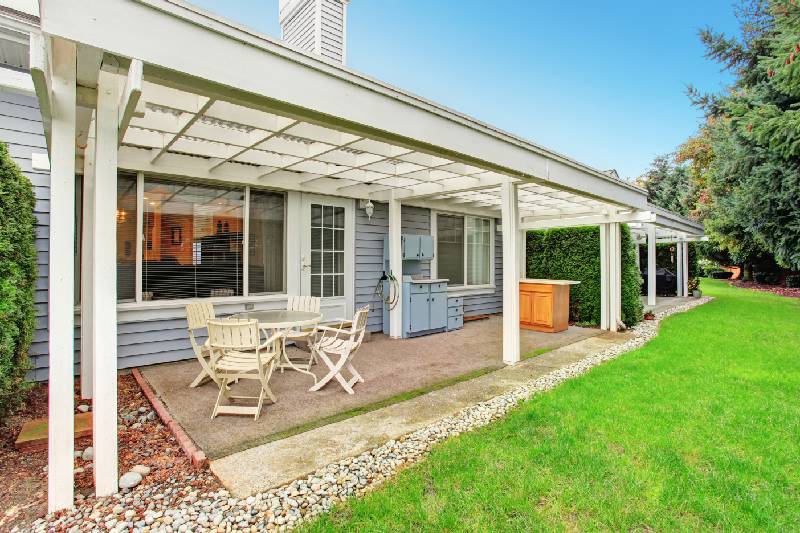
The pergola is the darling of landscape designers. It is an outdoor structure consisting of columns that support a roofing grid of beams and rafters.
When comparing awnings vs pergolas, the primary difference is the “ceiling.” A traditional pergola has an open roof. It’s designed to define a space—like an outdoor kitchen or a fire pit area—rather than provide 100% protection from the elements.
- Aesthetic Appeal: Pergolas add vertical interest to a flat Arizona backyard. They look “expensive” and architectural.
- Dappled Shade: If you enjoy some sunlight but want to take the “bite” out of the heat, the rafters of a pergola provide a moving pattern of shade throughout the day.
- The Downside: In the middle of an Arizona summer, “dappled” shade might not be enough. Many people who install pergolas eventually come to us to add a fabric cover or a retractable canopy to the top to create true outdoor shade Arizona can actually handle.
3. Lattice Patio Covers: The Middle Ground
Lattice covers are often confused with pergolas, but in the context of patio covers Phoenix AZ, they are usually attached structures made of embossed aluminum that mimics the look of wood (often called “Alumawood”).
- Partial Protection: Like a pergola, a lattice cover features spaced-out slats. However, these slats are usually much closer together, providing roughly 40% to 60% shade.
- Low Maintenance: Unlike wood pergolas that crack and peel in the desert heat, aluminum lattice patio cover options Arizona homeowners choose are virtually maintenance-free. They won’t rot, burn, or attract termites.
- Ventilation: Because the roof isn’t solid, heat can rise and escape through the slats, keeping the area underneath from feeling “stuffy.”
4. Solid Patio Covers: Total Blockout
If you want to treat your patio like an outdoor room, a solid patio cover is the way to go. These are permanent roof structures—either attached to the house or freestanding—that provide 100% shade and protection from rain.
- Maximum Cool: This is the most effective form of outdoor shade Arizona offers. A solid cover blocks every single UV ray and creates a true “dark” shade zone.
- Rain Protection: While we don’t get rain often, when the monsoons hit, a solid cover keeps your outdoor furniture and expensive grill bone-dry.
- Pergola vs Patio Cover: The main difference here is the “Solid” part. A patio cover is a roof; a pergola is a frame. If you want to install a ceiling fan or recessed lighting, a solid patio cover is the superior choice.
Comparing Awnings vs Pergolas: Which is for You?
The debate of awnings vs pergolas usually comes down to flexibility vs. permanence.
If you want a structure that “disappears” when you aren’t using it, awnings Arizona are your best bet. They don’t require posts in the middle of your patio, which keeps your view of the Camelback Mountain or the Catalina Foothills unobstructed.
However, if you want a permanent architectural feature that adds “weight” and value to your landscaping, a pergola is the winner. Just be prepared to add a fabric element if you actually plan on sitting under it at 2:00 PM in August!
Deep Dive: Pergola vs Patio Cover
When deciding on a pergola vs patio cover, think about the “Floor-to-Ceiling” experience.
A patio cover (especially a solid one) makes the area feel like an extension of the indoors. It changes the lighting inside your house because it permanently blocks the sun from those windows.
A pergola is an “outdoor” feature. It feels airy and open. For patio covers Phoenix AZ residents, the choice often hinges on the “monsoon factor.” If you have expensive outdoor electronics (like a 4K TV), a solid patio cover is a safer bet than the open rafters of a pergola.
Why the Material Matters in the Desert
Whether you’re looking at awnings Tucson AZ or patio covers Phoenix AZ, the material is the most important factor. Arizona is a “materials graveyard.”
- Fabric: At Phoenix Tent and Awning, we use solution-dyed acrylics. The color is locked into the fiber, so it won’t fade to a sad gray after one summer.
- Aluminum: This is the gold standard for types of patio covers in the desert. It reflects heat rather than absorbing it, and it won’t warp like vinyl or wood.
- Wood: Beautiful, but high-maintenance. It requires sanding and sealing every 2–3 years to prevent the sun from turning it into tinder.
Conclusion: Finding Your Perfect Shade
There is no “one-size-fits-all” answer for outdoor shade Arizona homeowners. Your decision should be based on three questions:
- Do I want full shade or partial shade?
- Do I want the structure to be permanent or retractable?
- Does the style match my home?
At Phoenix Tent and Awning Company, we’ve been helping residents find the perfect patio cover options Arizona offers for decades. Whether you’re leaning toward the elegant flexibility of awnings Phoenix AZ or the sturdy protection of a solid cover, we have the expertise to make your vision a reality.
Frequently Asked Questions
1. How do these different structures handle Arizona’s monsoon winds?
This is a critical consideration for patio covers Phoenix AZ residents. Solid patio covers and lattice structures are permanent and engineered to withstand high wind loads. However, when comparing awnings vs pergolas, awnings (specifically retractable ones) should be retracted during high winds to prevent fabric damage. Pergolas, being heavy and anchored, are very wind-resistant but offer no protection from rain.
2. Which option provides the best cooling for the inside of my home?
If your goal is lowering your AC bill, awnings Arizona are the clear winner. Because they can be mounted directly over windows and glass doors, they block solar heat before it enters your home. While a pergola vs patio cover debate usually focuses on the backyard, awnings are the most effective at reducing interior “greenhouse” heat gain.
3. What is the typical lifespan of these patio cover options in Arizona?
The desert sun is tough, but high-quality materials can last a long time.
- Aluminum (Lattice/Solid): Can last 20+ years with minimal maintenance.
- Fabric Awnings: High-end solution-dyed acrylics (like Sunbrella) typically last 8 to 12 years before the fabric needs a refresh, though the frames last much longer.
- Wood Pergolas: These usually require restaining every 2–3 years to reach a 15-year lifespan.
4. Between a pergola vs patio cover, which adds more value to my home?
Both add value, but they appeal to different buyers. A custom pergola is often seen as a “luxury” landscaping feature that adds massive curb appeal and “wow” factor. A solid patio cover or high-quality awnings Phoenix AZ installation is often valued more for its practical utility and energy-saving benefits. Generally, permanent structures (pergolas and solid covers) are factored more heavily into home appraisals.
5. Do I need an HOA or city permit for these outdoor shade Arizona solutions?
In most Arizona municipalities and HOAs, permanent structures like pergolas and solid patio covers do require approval and building permits to ensure they meet wind-load and setback requirements. Fabric awnings Arizona homeowners install are often easier to get approved because they are considered “semi-permanent,” but you should always check your specific HOA guidelines before starting any shade installation Arizona project.