
What Is the Average “Lifespan” of Different Types of Commercial and Residential Awnings
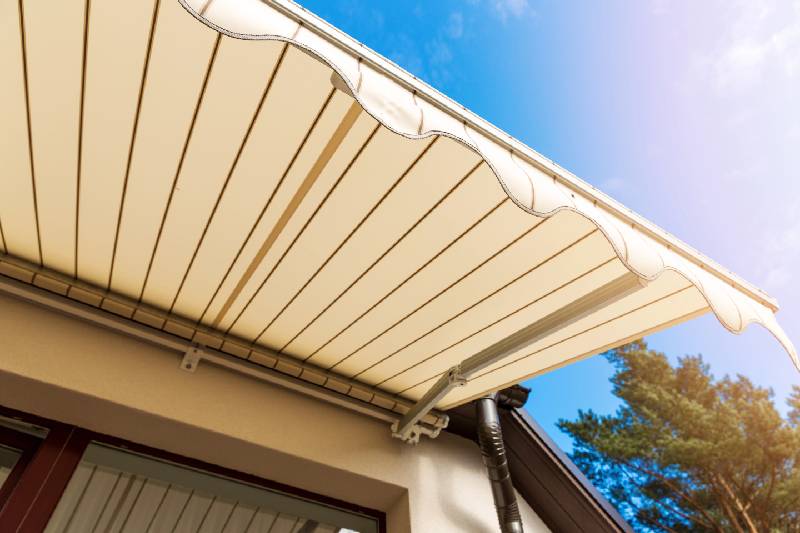
If you live or do business in the Valley, you know that the Arizona sun isn’t just a weather feature; it’s an environmental force. At Phoenix Tent and Awning Company, we often tell our clients that the desert is the ultimate testing ground for any outdoor product. When you invest in shade, the first question on your mind is usually: “How long is this actually going to last before the sun eats it?”
Understanding the awning lifespan of your investment is crucial for budgeting and property management. Whether you are looking to shade a residential patio in Scottsdale or a commercial storefront in downtown Phoenix, the longevity of your structure depends on the materials, the mechanical design, and how well you contend with our unique climate.
Understanding the Variables: What Defines Shade Awning Durability?
Before we dive into the numbers, it’s important to understand that “lifespan” is divided into two parts: the frame and the cover. In most cases, the frame of an awning will outlive the fabric by decades. When we discuss shade awning durability, we are looking at the synergy between the structural bones and the protective skin.
In Arizona, the primary “killers” of awnings are:
- UV Degradation: Constant bombardment by ultraviolet rays breaks down chemical bonds in fabric and thread.
- Monsoon Winds: Sudden, high-velocity microbursts can stretch fabric or bend mechanical arms.
- Heat Cycling: The extreme expansion and contraction of metal and fabric between a 115°F day and a 60°F night.
The Fabric Awning Lifespan: What to Expect from the “Skin”
The most common question we receive is regarding the fabric awning lifespan. Because the fabric is the part doing the heavy lifting—blocking the UV rays—it bears the brunt of the environmental damage.
For high-quality, solution-dyed acrylic fabrics (like Sunbrella), the average fabric awning lifespan in Arizona is typically 8 to 12 years.
- Solution-Dyed Acrylic: Unlike “dipped” or printed fabrics, solution-dyed acrylic has the color locked into the fiber itself while it is still in a liquid state. This is why it doesn’t fade to a ghost of its former self after two summers.
- Vinyl-Coated Polyester: Often used in commercial settings for its waterproof nature and ability to take graphics well, this fabric usually lasts 5 to 8 years in the desert before it begins to lose its flexibility and becomes prone to cracking.
Pro Tip: The thread is often the “weakest link.” Even if the fabric is fine, standard polyester thread can rot in 3–5 years. At Phoenix Tent and Awning, we recommend Gore-Tex Tenara thread, which is essentially immune to UV and will usually outlast the fabric itself.
Fixed Awning Lifespan: The Steady Sentinel
A fixed (or stationary) awning is a permanent frame structure with a fabric cover tensioned over it. Because these structures have no moving parts, the fixed awning lifespan is generally the most predictable.
- The Frame: Usually made of galvanized steel or powder-coated aluminum, these frames can easily last 20 to 30 years or more.
- The Coverage: Because a fixed awning is always exposed to the sun, 24/7, the fabric will hit the lower end of the lifespan estimate (around 8–10 years) unless it is regularly cleaned.
- Commercial Advantage: For businesses, the fixed awning lifespan is ideal because it provides consistent branding and protection for customers without requiring an employee to “operate” it.
Retractable Awning Lifespan: Flexibility vs. Mechanics
The retractable awning lifespan is a bit more complex. These units are popular for residential patios because they offer shade when you want it and open sky when you don’t.
- The Fabric Benefit: Because retractable awnings are typically stored in a protective housing or tucked away when not in use, the fabric awning lifespan can actually be extended. A retractable awning that is only out during use might see its fabric last 12 to 15 years.
- The Mechanical Component: You are now dealing with lateral arms, motors, and springs. A high-quality retractable system has a mechanical awning lifespan of 15 to 20 years.
- The “User Error” Factor: The biggest threat to the retractable awning lifespan is wind. If an awning is left extended during a haboob or a sudden monsoon, the mechanical arms can be bent or the mounting points compromised.
Comparing Types of Awnings and Their Longevity
When choosing between different types of awnings, it helps to see the data side-by-side.
| Awning Type | Frame Material | Fabric Type | Expected Lifespan (Arizona) |
| Fixed Residential | Aluminum/Steel | Acrylic | 8–12 Years (Fabric) / 25+ (Frame) |
| Retractable Lateral Arm | Powder-Coated Alum. | Acrylic | 12–15 Years (Fabric) / 15–20 (Motor/Arms) |
| Commercial Canopy | Galvanized Steel | Vinyl | 5–8 Years (Fabric) / 20+ (Frame) |
| Window Awning | Aluminum | Acrylic | 10–12 Years (Fabric) / 30+ (Frame) |
How to Maximize Your Awning Lifespan in the Desert
You aren’t powerless against the sun. There are several ways to ensure your shade awning durability stays at its peak:
- Rinse Monthly: Dust in Arizona is often alkaline. When combined with a little morning dew, it can “cook” into the fabric. A simple garden hose rinse once a month prevents this.
- Deep Clean Annually: Use a mild soap (like Dawn) and a soft brush. This removes organic matter that could lead to mildew if we get a wet winter.
- Retract During Storms: This seems obvious, but it’s the #1 cause of premature failure. If you wouldn’t stand outside with an umbrella, your retractable awning shouldn’t be out either.
- Professional Inspection: Every few years, have the mounting bolts and tension checked. Heat expansion can loosen hardware over time.
Conclusion
In the Phoenix area, an awning isn’t just a decoration—it’s a critical piece of your home or business infrastructure. While the fixed awning lifespan offers the most stability, the retractable awning lifespan offers the most versatility. By choosing high-quality materials and performing basic maintenance, you can ensure that your “shade investment” pays dividends for a decade or more.
At Phoenix Tent and Awning Company, we’ve been shading the Valley since 1910. We know exactly what it takes to make a structure last in this heat.
Frequently Asked Questions
1. Does the color of the fabric affect the awning lifespan?
Surprisingly, yes. In the extreme UV of Arizona, darker colors (like forest green, navy, or black) often show less visible “yellowing” but can absorb more heat, which can slightly accelerate the breakdown of the fibers compared to lighter, more reflective colors. However, with modern solution-dyed acrylics, the difference is minimal.
2. Can I just replace the fabric, or do I need a whole new awning?
In 90% of cases, you only need to replace the fabric! Since the frame has a much longer fixed awning lifespan, we can simply perform a “recover.” This is a cost-effective way to give your property a brand-new look while keeping your original structural investment.
3. Is a motorized retractable awning more likely to break than a manual one?
Actually, motorized awnings often have a longer retractable awning lifespan. Manual cranks can be jerked or over-extended by users, whereas motors have “limit switches” that ensure the fabric is always tensioned perfectly and never rolled up incorrectly.
4. How does “shade awning durability” compare between aluminum and steel frames?
In Arizona, aluminum is often preferred for residential use because it is naturally rust-resistant. However, for large-scale commercial types of awnings, steel is often used for its superior strength to handle wind loads. As long as steel is properly galvanized or powder-coated, both offer excellent durability.
5. What is the “Tenara” thread I keep hearing about?
Standard polyester thread will usually fail long before the fabric does. Tenara thread is made from expanded PTFE (Teflon). It is completely unaffected by UV rays, salt, or extreme heat. Using this thread is the single best way to maximize your fabric awning lifespan.