
5 Differences Between Awnings and Canopies
In the Valley of the Sun, shade isn’t a luxury—it’s a survival strategy. When the thermometer in Phoenix consistently flirts with the 115°F mark, your outdoor space is either a sanctuary or a furnace. At Phoenix Tent and Awning Company, we’ve been helping Arizonans reclaim their patios since 1910, but one question still comes up more than any other: “What is the actual difference between awning and canopy structures?”
While both are essential outdoor shade structures, they serve very different purposes. Choosing the wrong one for your home or business could mean the difference between a cool breeze and a structure that succumbs to the first monsoon of the season.
Whether you are looking for awnings Mesa AZ style or a massive resort canopy vs awning setup in Scottsdale, understanding these five key differences will help you find the best shade option for hot climates.
1. Structural Attachment: Wall-Mounted vs. Freestanding
The most fundamental distinction between an awning vs canopy is how it stays upright.
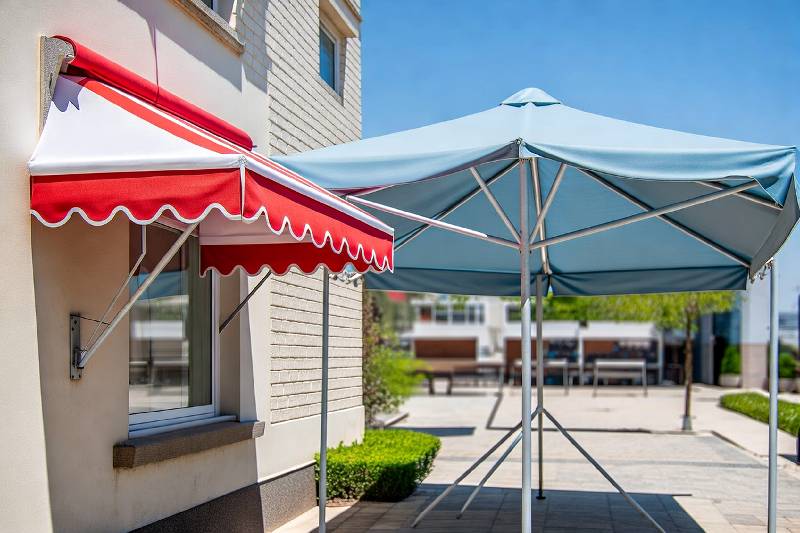
- Awnings: By definition, an awning is a secondary covering attached to the exterior wall of a building. It is a “cantilevered” structure, meaning it projects outward without the need for vertical support posts. This makes awnings Arizona favorites for those who want an unobstructed view of their pool or landscaping.
- Canopies: A canopy is generally a freestanding structure. While it can be placed right up against a building, it relies on its own frame and vertical posts (usually four or more) to support the weight of the fabric.
If you have a narrow patio and don’t want to trip over metal poles, an awning is your winner. If you want to create a “shaded island” in the middle of your yard or over a detached BBQ island, a canopy is the way to go.
2. Portability and Permanence
When residents search for outdoor shade Arizona, they are often looking for two different things: a permanent home upgrade or a temporary party solution.
- Awnings: These are semi-permanent to permanent home improvements. Whether you are installing awnings Tempe AZ homeowners love or commercial storefront versions, they are bolted into the studs or headers of your home. They aren’t meant to be moved once they are up.
- Canopies: Canopies offer a wider spectrum. You have permanent “cabana-style” canopies used at resorts, but you also have the “pop-up” variety used at farmers’ markets. For the sake of high-end outdoor shade structures, we typically focus on engineered, permanent canopies that provide 24/7 protection.
3. Coverage Area and Size Constraints
The difference between awning and canopy capabilities is most apparent when you look at the sheer square footage of shade.
- Awnings: Because they are wall-mounted, awnings have a physical limit to how far they can “project” (extend) from the wall before the weight becomes a structural risk. Most residential awnings Phoenix AZ can project between 10 to 14 feet.
- Canopies: Since canopies have their own legs, they can be massive. You can link canopies together to cover an entire restaurant terrace or a massive poolside lounge area. When looking for the best shade option for hot climates to cover a 40-foot long area, a series of canopies or a single large tension structure is often more practical than a single giant awning.
4. Wind and Weather Resistance: The Monsoon Factor
If you live here, you know about the “Haboobs.” Arizona monsoons bring sudden, violent microbursts that can turn a shade structure into a kite in seconds.
- Awnings: Retractable awnings Tucson AZ and Phoenix residents prefer are designed to be “smart.” Many come with wind sensors that automatically retract the fabric when things get dicey. However, when extended, they are more vulnerable to wind because they only have one point of attachment (the wall).
- Canopies: Because a canopy is anchored into the ground at four or more points, it is generally much more stable in high winds. A permanent, engineered canopy with high-quality outdoor shade Arizona fabric can often stay standing during storms that would require an awning to be retracted.
5. Versatility and Operation
The final canopy vs awning showdown comes down to how much control you want over your environment.
- Awnings: Modern awnings are all about versatility. You can have them out for a Saturday morning brunch and retract them by noon to keep your house cooler or let the winter sun warm your windows. This adjustability is a huge selling point for awnings Mesa AZ homeowners looking to save on energy bills.
- Canopies: Most high-end canopies are “fixed.” The fabric is tensioned over the frame and stays there. While you can’t “retract” a canopy with a button, you gain a sense of a permanent “outdoor room” that is always ready for use.
Why the Right Choice Matters for the Arizona Climate
In the desert, the sun is a relentless overachiever. UV rays here don’t just fade your furniture; they literally “cook” low-quality materials. When choosing between an awning vs canopy, you have to look at the fabric.
At Phoenix Tent and Awning Company, we recommend solution-dyed acrylics for both. Why? Because they are breathable. If you use a cheap plastic tarp or a non-breathable vinyl, you create a “heat trap” underneath the structure. The best shade option for hot climates is one that blocks the light but allows the hot air to rise through the fabric, creating a natural cooling effect.
Whether you’re in the market for awnings Tempe AZ style for your kitchen window or a massive outdoor shade Arizona canopy for a commercial venue in Tucson, the goal is the same: thermal comfort.
Conclusion
So, which one wins the awning vs canopy debate?
- Choose an awning if you want flexible shade, energy savings for your interior, and a clear floor space without posts.
- Choose a canopy if you need to cover a large, freestanding area, want a permanent “outdoor room” feel, or need a structure that stays up during the windier days of the season.
No matter your choice, make sure it’s built for the Arizona heat. Standard “big box store” solutions rarely survive more than one or two summers in our UV index. Investing in professional-grade outdoor shade structures ensures that your “cool retreat” stays cool for years to come.
Frequently Asked Questions
1. Which is more expensive, an awning or a canopy?
Generally, a high-quality retractable awning is more expensive than a basic canopy because of the lateral arm technology and motorization. However, a custom-engineered, permanent steel-frame canopy can be more costly due to the labor and materials required for the frame and ground anchoring.
2. Can I install awnings Tucson AZ style myself?
While “DIY” kits exist, we strongly advise against it in Arizona. Because of our high wind loads, awnings Arizona must be anchored into the structural headers of the house with specific lag bolts. Incorrect installation can lead to the awning pulling the fascia right off your home during a storm.
3. Will an awning or canopy help lower my AC bill?
Yes! Awnings are actually slightly better for this because they can be placed directly over windows and glass doors. By blocking the sun before it hits the glass, an awning can reduce heat gain in your home by up to 77%.
4. How do I maintain the fabric on my outdoor shade structures?
The best maintenance for the outdoor shade Arizona residents have is simple: a garden hose. Rinsing your fabric once a month prevents the “alkaline dust” of the desert from baking into the fibers. For deeper cleans, use a mild soap—never a pressure washer!
5. Which is the best shade option for hot climates if I have a very windy backyard?
If you are in an area prone to high winds (like near a canyon or open desert), a permanent, four-post canopy is usually the better choice. It offers more points of stability than a cantilevered awning.