
How to Repair a Canvas Awning: Fabric Tears, Seams, and Bent Frames
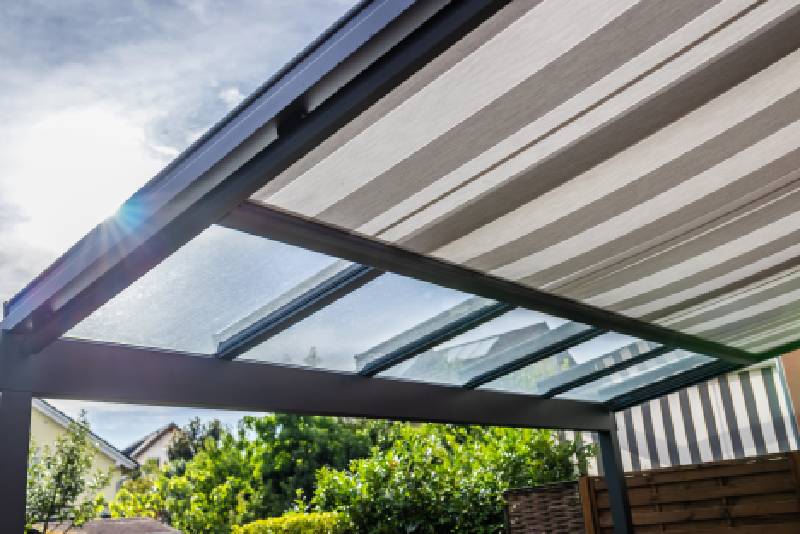
You can repair a canvas awning yourself if the damage is small: a tear under 3 inches, a leaking seam, or surface mildew. Clean the area, apply an outdoor canvas repair patch to both sides of the tear, and reseal seams with a canvas seam sealer. Anything bigger, a long rip, shredded edges, failed stitching across a panel, or a bent frame, is past the patch stage. At that point recovering the frame with new fabric costs far less than a new awning and fixes the problem for the next decade instead of the next season.
First, figure out what actually failed
Awning damage in Phoenix, Mesa, and Tucson almost always traces back to one of four causes, and the cause decides the fix:
- UV rot. Fabric that tears easily by hand, feels brittle, or has faded in stripes is sun-degraded through and through. Patches won’t hold in rotted fabric.
- Thread failure. The fabric looks fine but panels are separating at the seams. Standard polyester thread dies in Arizona UV years before good fabric does.
- Wind damage. Monsoon gusts tear fabric at stress points and bend frame rafters. Common on awnings left extended during storms; our post on awning problems in Arizona covers the usual failure points.
- Mildew and stains. Cosmetic, and usually cleanable if the fabric underneath is still sound.
DIY fix 1: patching a small tear
For clean tears under about 3 inches in fabric that’s still strong:
- Wash the area with mild soap and water, rinse, and let it dry completely.
- Cut two patches of matching outdoor fabric, each at least 1 inch larger than the tear on every side, with rounded corners so the edges don’t peel.
- Apply outdoor fabric repair adhesive or a self-adhesive canvas patch to both sides of the tear, sandwiching it.
- Press firmly, weight it down, and give the adhesive a full 24 hours before the awning takes sun or wind.
Test the surrounding fabric first by pressing a thumbnail into it. If the fabric dents, cracks, or feels papery, it’s rotted and the patch will just tear out along its own edge.
DIY fix 2: resealing a leaking seam
If water drips through stitch lines during monsoon rain, brush canvas seam sealer along the seam on the top side and let it cure per the label. This works when the thread is intact and only the needle holes are leaking. If the thread itself is snapping, sealing won’t save it; the seam needs restitching with UV-stable PTFE thread, which is a sewing shop job.
DIY fix 3: cleaning mildew and stains
Mix about a cup of chlorine-free oxygen bleach into a gallon of water, soft-brush it into the stain, let it sit 15 minutes, and rinse thoroughly. Skip pressure washers, which drive water through seams and can delaminate coatings. After any deep clean, re-treat acrylic fabric with a fabric guard spray so it beads water again.
Frame repairs: know when to stop
Tighten loose lag bolts and brackets yourself; check them yearly, since heat cycling works fasteners loose. Surface rust on steel frames can be wire-brushed and spot-primed. Draw the line at bent rafters, cracked welds, and pulled wall anchors. A frame carries real load in wind, and a re-bent rafter is weaker at the bend forever. Welding, re-anchoring into stucco or block, and arm replacement on retractable units belong with a shop that carries insurance for exactly this work.
The repair most people don’t know exists: recovering
An awning is a frame plus fabric, and the frame usually outlives the fabric two or three times over. If your frame is straight and solidly anchored, we can pull measurements from it and sew a complete new cover, in the same color or something new, for a fraction of what a full replacement costs. This is the standard fix for sun-rotted awnings across Scottsdale and Tempe. When you’re choosing the new cover, our comparison of the best fabric for an outdoor awning explains why solution-dyed acrylic is worth it in this climate.
Repair, recover, or replace: the quick math
- Repair when damage is local and the fabric is under 5 or 6 years old.
- Recover when the fabric is failing but the frame is sound. Most common outcome in Arizona.
- Replace when the frame is bent, rusted through, or the awning never fit the space well to begin with.
Awning repair across the Valley and Tucson
Phoenix Tent and Awning Company repairs, recovers, and replaces awnings for homes and businesses in Phoenix, Scottsdale, Tucson, Mesa, and Tempe. We restitch seams with PTFE thread, sew new covers in our own Phoenix shop, and fix frames properly instead of patching over structural problems. Send us a photo of the damage and we’ll tell you honestly which of the three options your awning needs.
Frequently asked questions
Can you patch a canvas awning?
Yes, if the tear is under about 3 inches and the surrounding fabric is still strong. Patch both sides with outdoor fabric adhesive. Patches fail quickly in sun-rotted fabric, so test the material first.
How much does it cost to recover an awning?
Typically a fraction of full replacement, since you’re paying for fabric and sewing rather than a new frame and structural install. Exact cost depends on size and fabric; measurements from your frame get you a firm quote.
Why are my awning seams coming apart when the fabric looks fine?
The original polyester thread has UV-rotted before the fabric did, which is common in Arizona. The fix is restitching with PTFE thread, which outlasts the fabric itself.
Can a bent awning frame be fixed?
Minor bends in rafters can sometimes be replaced piece by piece, and cracked welds can be re-welded. Once a frame has multiple bends or pulled anchors, replacement is usually safer and cheaper than chasing repairs.
How do I keep a repaired awning from tearing again?
Rinse dust off monthly, retract or brace it before monsoon storms, and check fasteners each spring. Most repeat tears happen at the same stress points during wind, so storm habits matter more than any product.